

Verified by the Cebu City Tourism Commission · every fact names its source below
The Cebuano Character & Spirit
Ask people who have travelled through Cebu what stayed with them and the answer is rarely a building. It is a person. The Commission's reading of its own visitor research is that the Cebuano is the reason people come back: quick to laugh, quick to feed you, and hard to leave.
That warmth has a history. A port people learns early that the stranger at the pier is a customer, a cousin, or both. For a thousand years Sugbo received Chinese traders, Siamese crews, Malay interpreters and eventually Spanish soldiers, and it found a way to talk to all of them. Hospitality here is not a service style. It is what a trading harbour does.
There is a word for it. Cebuanos call each other bai: friend, brother, the person beside you. As Commissioner Tetta Baad tells it, the spelling was drawn in the 1980s so that foreign guests could read and say the greeting, and the city took it home. It is flavour, not doctrine, and it is how the word is written today.
Today's Cebuano carries that same spirit forward: creative, excellent, bold, united.
There is a second word that explains the first. When a Cebuano tells you something is sakto, it means exactly right, just enough, precisely as it should be. It is a quiet standard. People here do not announce their work. They expect it to be correct, and they expect you to notice.
And there is a third, harder to translate: the willingness to go first. The ancestors of this city pushed boats off the beach toward islands they could not see. The habit did not die. Cebu received the faith first, and it was the first Spanish city in the islands. In the 1980s, when few foreign visitors were coming to the Philippines at all, its tourism people went out and sold Cebu abroad as a place of its own. When something has never been done here, a Cebuano will usually try it.
What holds these together is a strong sense of being one people. Cebuanos in Manila, in Dubai, on ships at sea, still say bai to each other and know what it means. The city takes care of its own, argues loudly among itself, and closes ranks at once when someone outside gets it wrong.
Talent
Cebu City is young. The Philippines has one of the youngest populations in Asia, with a median age of about twenty-five, and Cebu City counted just under a million people in the 2020 census. The country ranks second in Asia for English proficiency, and Cebuanos grow up between two languages of the wider world. Its university district is a city inside the city. Walk through it on a weekday and you are walking through the future workforce of the Pacific.
The city has been a place of learning for a long time. The University of San Carlos traces its roots to a colegio founded in 1595. Around it stand the University of the Philippines Cebu, Cebu Normal University and a dozen more colleges, most of them within walking distance of one another.
The inheritance shows in what Cebuanos do for a living. The Philippines is one of the world's largest sources of seafarers, and the Visayas is one of the regions they come from. The descendants of the people who first sailed these seas now crew the container ships and cruise liners of every ocean. It is the same trade, in a larger hull.
The same sea-facing instinct made Cebu a centre for outsourced services, with English fluency and a working day that overlaps every time zone. Cebu carries about fifteen per cent of the country's information-technology and business-process workforce. Cebuanos spend their nights talking to Chicago and their mornings to Sydney.
Talent here is not only a matter of numbers. It is the habit of being good enough to send. Cebuano engineers, nurses, chefs, designers, and captains are found everywhere the world has work, and the ones who stay build for the ones who leave to come back to.
Creative Industries
The sea people put their genius into things that could move. Their descendants still do.
Cebu is known internationally for furniture and design. Workshops in and around the city turn rattan, abaca, stone and native hardwoods into pieces that furnish hotels and homes across the world, and a generation of Cebuano designers has become known abroad. The city's design fairs draw buyers from every continent.
Fashion runs alongside it. Cebuano designers dress pageant queens, film stars and brides from Manila to Los Angeles, and the couture tradition here, in beadwork and hand embroidery, carries on the fine needlework of the old town.
Then there is the work that feeds Sinulog. Every January, hundreds of costume-makers, choreographers, prop-builders and musicians across the city produce a parade that takes a year to prepare and a day to perform. It is made almost entirely by people who do something else for a living.
Cebu has a film community, an animation and games sector that grows every year, a music scene with its own history (there is more on that under Sinulog), and a street-art movement that has quietly turned whole barangay walls into galleries.
What unites them is the old preference for the thing that moves: a chair that ships, a gown that walks, a dance that flows. The medium changes; the instinct does not.
Innovation
A city that once fitted the ship that found the way back across the Pacific has not stopped building for the crossing. The trade that followed ran between Manila and Acapulco from 1571 until 1815, and Cebu had no share in it. Cebu opened the route and watched the profit sail past; what it kept was the habit of building.
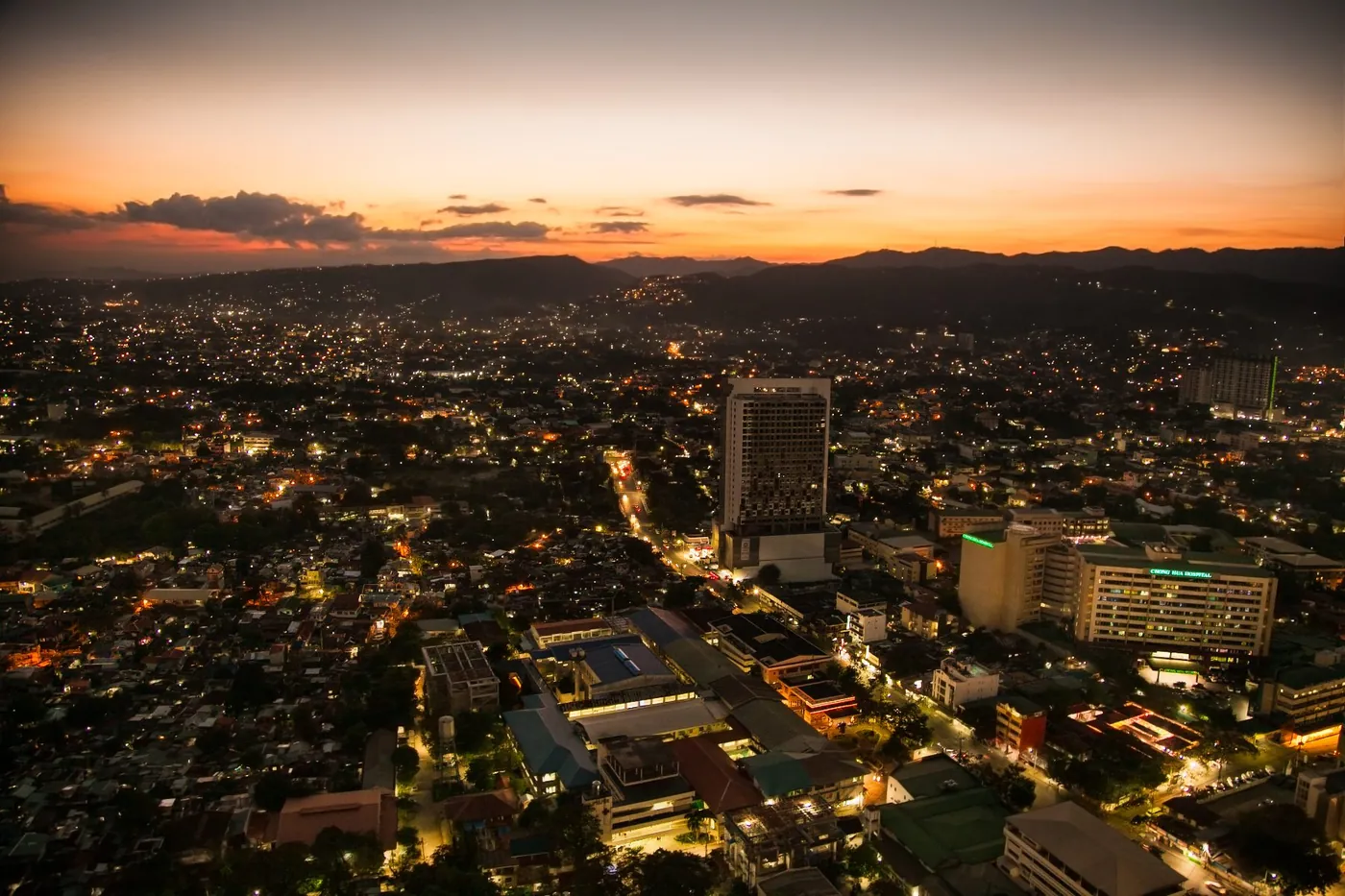
Look at the skyline from the hills and you see it. Cebu IT Park stands on what was the Lahug airport runway, and Cebu Business Park on ground that was a golf course. Together they hold the offices of companies from every continent and the desks of a workforce that was in school ten years ago.
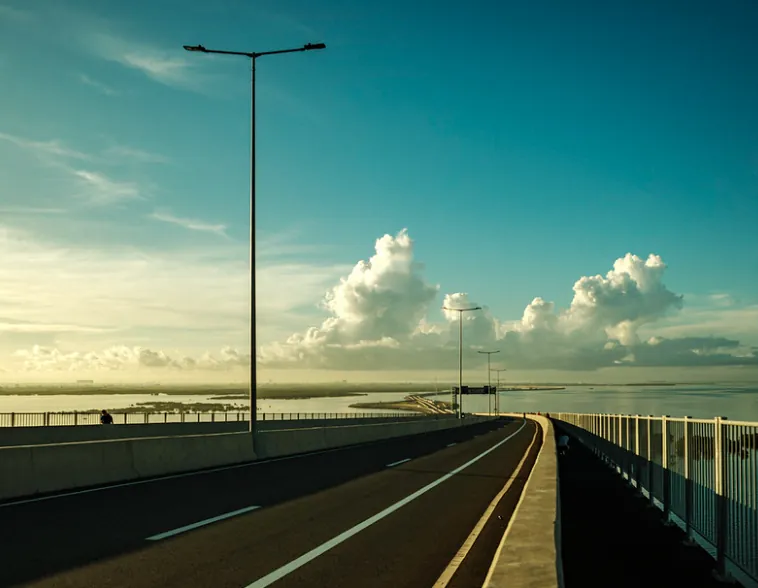
Look at the water and you see it too. The Cebu–Cordova Link Expressway crosses the channel from the city's South Road Properties to Mactan: 8.9 kilometres in all, opened in 2022, its cable-stayed span carried on towers shaped like the crosses of the old town. Those are its operator's figures. It was built with a private partner, not a subsidy.
Cebuano innovation is rarely loud. It is in the companies founded by graduates who stayed, building for markets abroad from offices a short ride from the port; and in the port itself, the largest domestic port in the country, though most passengers never notice. The balangay was not a dramatic boat. It was simply built better than the sea required. That standard survives.
The brand book puts it in one line, and it belongs here: the business hub in the Pacific. Not the biggest. The one that has been in the trade the longest.
Where the people of this city walk, climb, sail and eat is the next part of the story.
Continue to
Walks